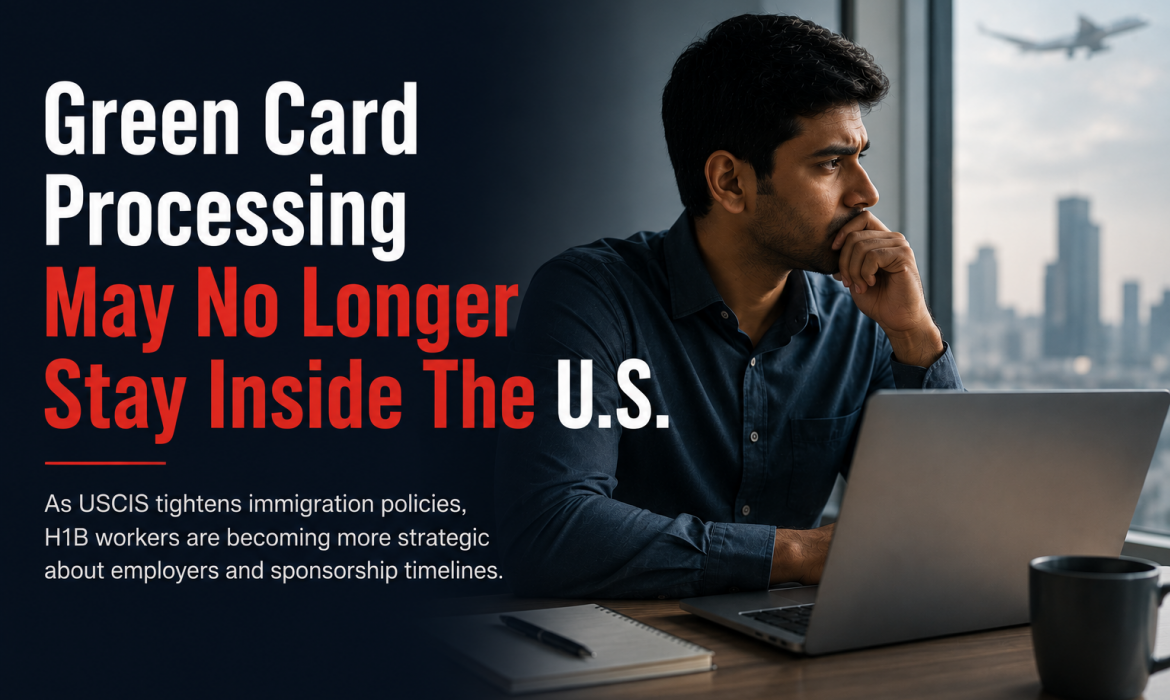
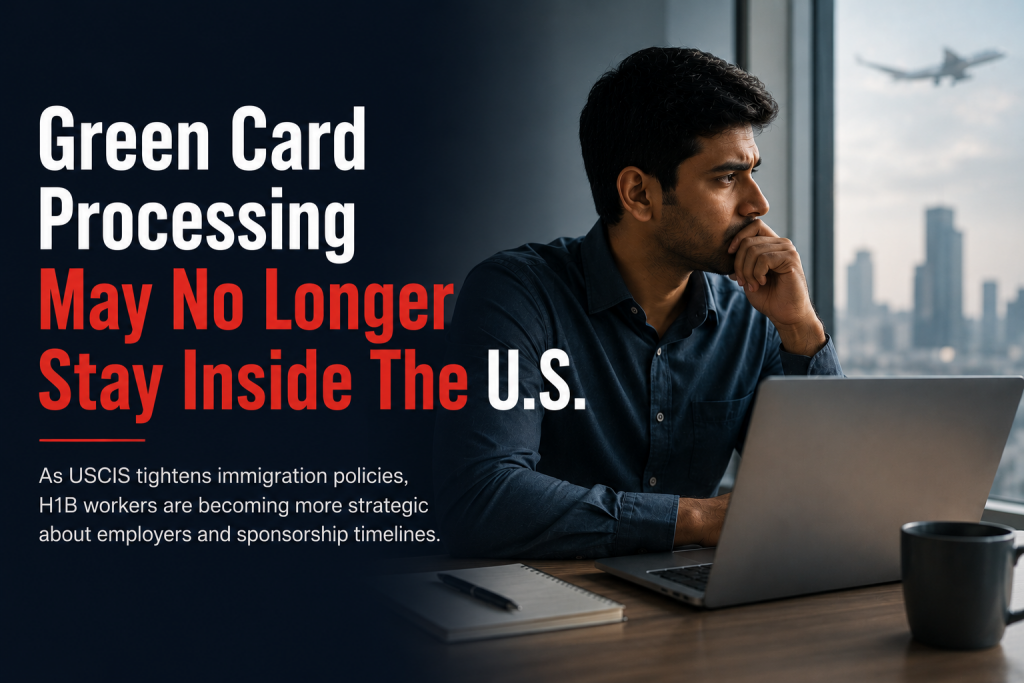
The latest USCIS green card update 2026 has created significant concern among H1B professionals across the United States. New policy memos, stricter adjustment-of-status interpretations, increasing PERM backlogs, and rising processing uncertainty are forcing many skilled workers to rethink their long-term immigration strategy.
For years, many H1B workers believed that simply remaining with the same employer long enough would eventually lead to permanent residency. But 2026 is exposing a difficult reality: immigration stability now depends heavily on employer action, timing, and long-term sponsorship planning.
The employment-based green card system is becoming more competitive, more scrutinized, and more time-sensitive than ever before.
And professionals who delay strategic decisions may face consequences that become difficult to reverse later.
The Biggest USCIS Green Card Changes Happening in 2026
One of the most discussed developments in 2026 is the growing uncertainty surrounding adjustment of status applications and employment-based sponsorship timelines.
Recent USCIS guidance has signaled stricter review standards for certain green card applicants adjusting status inside the United States.
Immigration attorneys and policy analysts are closely watching:
- increased scrutiny of adjustment applications
- tighter discretionary review standards
- changing interpretations around immigrant intent
- longer PERM processing timelines
- slower employment-based movement for backlogged categories
At the same time, the Department of Labor backlog continues affecting PERM processing timelines nationwide. Some cases now extend well beyond a year before reaching the next stage.
For H1B workers, this creates one critical reality:
Delays at the employer level are now far more dangerous than before.
Why Waiting Too Long Is Becoming Riskier
In previous years, many professionals delayed sponsorship conversations because they believed there was still “plenty of time.”
But in 2026:
- PERM timelines are slower
- visa bulletin movement remains inconsistent
- retrogression risks continue
- employment-based backlogs remain severe for many applicants
This means every delayed year matters more.
Professionals who wait too long before starting:
- PERM
- I-140
- priority date establishment
may face significantly longer immigration uncertainty later.
For many workers, the biggest risk is not USCIS itself.
It is staying with an employer that has no urgency.
The Hidden Problem Many H1B Workers Realize Too Late
One of the biggest mistakes professionals make is assuming sponsorship conversations automatically lead to action.
In reality, many companies:
- postpone immigration planning
- avoid committing to timelines
- delay PERM preparation
- continue extending uncertainty year after year
This creates long-term dependency.
And by the time many professionals realize nothing is progressing, they are already deep into H1B timelines with reduced flexibility.
The 2026 immigration environment rewards early planning — not passive waiting.
Why More H1B Professionals Are Changing Employers in 2026
A major workforce trend in 2026 is the increase in H1B transfers among skilled professionals seeking long-term sponsorship stability.
Workers are increasingly prioritizing:
- immigration transparency
- faster sponsorship timelines
- employer communication
- long-term career alignment
- stable green card planning
Industries seeing major movement include:
- software engineering
- AI and cloud infrastructure
- cybersecurity
- healthcare staffing
- nursing
- data engineering
- enterprise IT
Professionals now understand something important:
Your immigration future is directly connected to your employer’s willingness to act early.
The 2026 Green Card Backlog Is Creating More Pressure
The employment-based green card backlog remains one of the biggest concerns for skilled immigrants. Current projections continue showing severe wait times in several categories, particularly for Indian-born applicants.
Recent visa bulletin movement has remained inconsistent across EB categories:
- EB-2 backlogs remain difficult
- EB-3 movement varies monthly
- retrogression concerns continue
- filing windows remain unpredictable
This is why priority date timing matters more than ever.
Even a one-year delay starting the process can affect long-term immigration outcomes significantly.
How MolinaTek Helps H1B Professionals Navigate the 2026 Immigration Environment
At MolinaTek, we understand that modern immigration planning is no longer just about finding a job.
It is about building long-term career stability.
As USCIS policies become stricter and green card timelines become more competitive, professionals need employers that actively support immigration strategy — not employers that endlessly delay it.
MolinaTek helps qualified professionals:
- explore H1B transfer opportunities
- connect with sponsorship-focused employers
- align career growth with immigration planning
- access IT and healthcare roles nationwide
- understand long-term sponsorship pathways
Our approach focuses on:
- workforce stability
- long-term placement strategy
- sponsorship transparency
- career growth alignment
We work with professionals across:
- software engineering
- cloud computing
- cybersecurity
- healthcare
- nursing
- data analytics
- enterprise technology
For many H1B workers, the biggest breakthrough is not just changing jobs.
It is finally joining an employer that treats immigration planning seriously.
What Smart H1B Professionals Are Doing Differently in 2026
Professionals succeeding in today’s immigration environment are becoming far more strategic.
They are:
- evaluating sponsorship timelines earlier
- asking detailed immigration questions before joining
- prioritizing long-term employers
- avoiding indefinite delays
- monitoring USCIS policy updates closely
Most importantly, they understand that immigration timing now matters more than ever.
Waiting passively is becoming one of the biggest career risks in the employment-based immigration system.
Conclusion
The USCIS green card update 2026 reflects a larger shift happening across the entire employment-based immigration system.
Processing is becoming more competitive.
Backlogs remain severe.
Employer sponsorship strategy matters more than ever.
For H1B professionals, immigration stability is no longer something that can be delayed indefinitely.
The professionals who succeed in this environment are the ones who act strategically, evaluate employers carefully, and prioritize long-term sponsorship planning early.
Molina Tek helps skilled professionals navigate this evolving landscape by connecting talent with employers who understand both workforce growth and long-term immigration commitment.
For many workers, the right employer is no longer just about salary.
It is about securing a future.
Frequently Asked Questions(FAQs)
Recent USCIS guidance has increased scrutiny around adjustment-of-status applications while employment-based backlogs and PERM delays continue affecting applicants nationwide.
Yes. H1B professionals are closely monitoring changes involving adjustment-of-status interpretation, PERM delays, and visa bulletin movement.
Many professionals are seeking employers with stronger long-term sponsorship planning and better immigration transparency.
Eligible H1B workers can typically transfer employers through H1B portability rules under USCIS regulations.
Backlogs, retrogression, and slower processing timelines mean delays can significantly affect long-term immigration outcomes.
MolinaTek helps connect qualified professionals with sponsorship-focused opportunities in IT and healthcare while supporting long-term career growth strategies.